
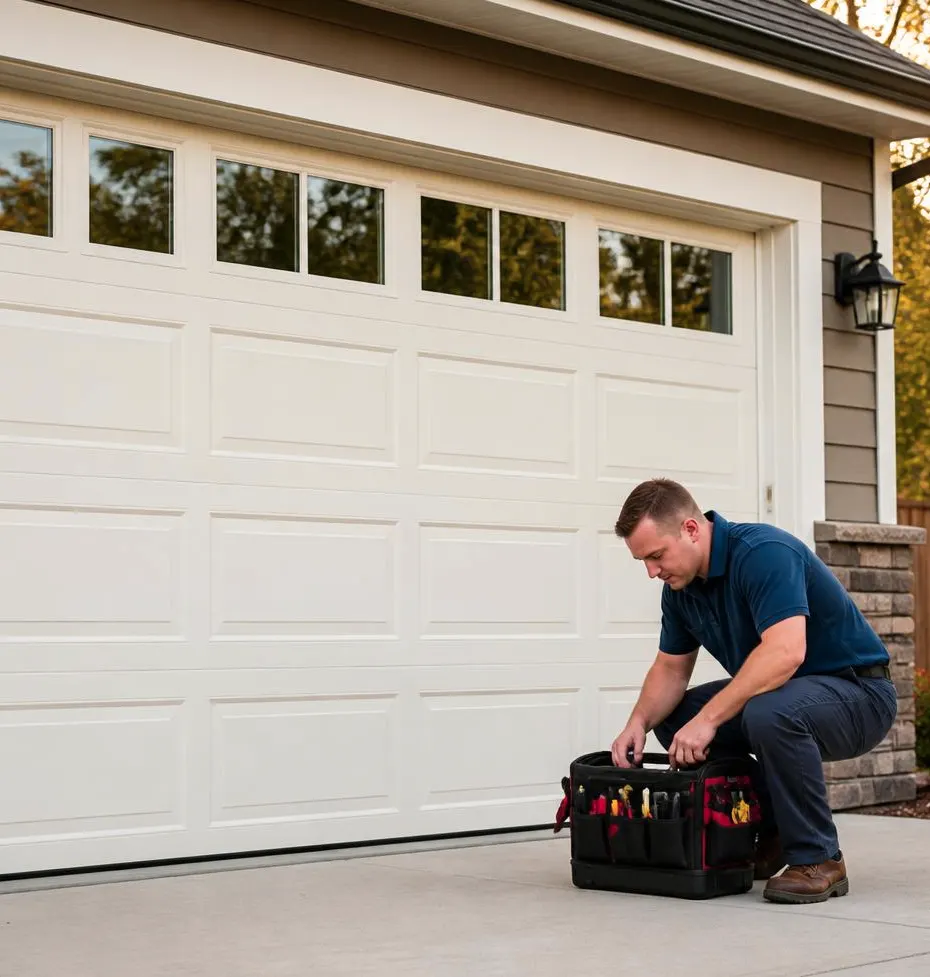
A typical late-October service call starts the same way: the door worked fine all September, then one cold morning it groans halfway up, the opener reverses for no clear reason, or it just won't budge at all. The homeowner usually says nothing changed — but something did. The temperature dropped overnight, and a door that was already a little worn finally has nowhere left to hide.
Why Cold Weather Exposes Problems Summer Hides
Garage doors in this part of Indiana live through big temperature swings — humid, sticky summers followed by hard freezes, ice, and road salt tracked in on every car. Metal contracts in the cold, lubricant thickens or dries out, and rubber seals stiffen and crack. A spring that was carrying a door just fine in August can suddenly feel undersized in January because cold steel is less flexible and under more strain per cycle. None of this is dramatic on its own, but it adds up, and it tends to show up all at once on the coldest morning of the season.
Springs and Cables
Torsion springs lose a bit of tension as metal contracts in the cold, which is why doors often feel heavier or move slower in winter even with no visible damage. Look for gaps in the coils, rust forming on the spring itself, or fraying at the cable near the bottom bracket. A spring that's already near the end of its cycle life is far more likely to snap on a cold morning than a mild one, because the metal is under extra stress right when you're asking it to lift a door loaded with condensation or ice weight.
Rollers, Hinges, and Tracks
Cold makes old grease stiff and gritty, which is exactly what you don't want on moving parts. Nylon rollers handle temperature swings better than steel ones, but both need lubrication built for the cold — a silicone-based garage door lubricant works better in winter than household oil, which thickens and attracts dust. Check that tracks are still aligned; a door that's been slightly off-track all summer tends to bind up hard once metal contracts.
Weatherstripping and Bottom Seals
This is the part people notice last and regret most. Cracked or flattened weatherstripping lets cold air, moisture, and road salt spray straight into the garage, which speeds up rust on the door panels, the springs, and anything stored nearby. Rubber seals that have gone stiff and brittle won't compress properly against the floor, so you'll feel a draft along the bottom even with the door fully closed.
Opener and Safety Sensors
Openers work harder in winter because the door itself is heavier to move and the mechanics are stiffer. If the door reverses unexpectedly, stalls partway, or the opener motor sounds strained, cold is magnifying an issue that was already there — misaligned safety sensors, a struggling drive gear, or a motor that's been due for service for a while. Battery backup units (if installed) also lose capacity in cold temperatures, so a unit that would normally get you through a power outage may underperform when you need it most.
A Pre-Winter Checklist You Can Do This Weekend
- Lubricate rollers, hinges, and the torsion spring with a silicone-based lubricant rated for cold temperatures.
- Inspect weatherstripping along the bottom and sides of the door; replace anything cracked, flattened, or pulling away from the frame.
- Test the balance by disconnecting the opener and lifting the door halfway by hand — it should hold its position, not slam down or fly up.
- Clear tracks of summer debris, spiderwebs, and dried grease buildup before it gets gummy in the cold.
- Check the auto-reverse safety feature by placing a block in the door's path and confirming it reverses on contact.
- Look at cables and bottom brackets for fraying, rust, or looseness — these are small signs of bigger problems coming.
- Wipe down and inspect panels for rust starting at seams or along the bottom, especially if the garage floor sees a lot of salty runoff from vehicles.
Salt, Slush, and Driveway Runoff
Every car that pulls into the garage through winter brings in melting snow, ice, and road salt. That mix pools at the base of the door and along the threshold, which is exactly where seals and metal brackets are most vulnerable to corrosion. A worn bottom seal doesn't just let in cold air — it lets salty water sit against the bottom panel and hardware all winter. Keeping that seal in good shape and occasionally wiping down the floor track area goes a long way toward preventing rust damage that's expensive to fix come spring.
When to Call Mishawaka Garage Door
If the door is noticeably heavier to lift by hand, the opener strains or reverses on its own, or you're seeing rust at the spring coils or cable ends, that's past the point of a DIY fix — it's a sign the hardware is wearing out and could fail without warning. Our Garage Door Maintenance visits cover exactly the checklist above with equipment and lubricants built for cold-weather performance, and if a spring or cable is already showing fatigue, our Spring Replacement service gets it swapped out before it breaks on a freezing morning when you need the door open most.
If your garage door is already fighting you as the temperature drops, don't wait for the first real freeze to find out how bad it is. Call Mishawaka Garage Door today and we'll get it running smoothly before winter settles in across Mishawaka, IN.