
What Another Season of Ignoring This Actually Costs
Skip garage door prep one more season and the bill usually isn't a cracked panel. It's a door that buckles inward during a wind gust, lets pressure build inside the garage, and pushes outward on the roof and walls from the inside. Insurance claims for wind-related garage door failures routinely involve roof damage, drywall cracking, and sometimes a totaled vehicle parked behind a door that came off its tracks. The door itself might be the cheapest part of that repair. The water that gets in through a door that's no longer sealing tight, the opener that fails during a power outage and leaves the door stuck half-open through a cold snap, the torsion spring that finally snaps under added strain right when you need the door to close fast—these are the costs of waiting.
Why the Garage Door Is a Home's Weakest Wall
Every other exterior wall on a house is a solid, continuous surface anchored into the frame. The garage door is a large moving panel held in place by tracks, rollers, hinges, and a spring system, none of which were built to resist sideways wind pressure the way a stud wall is. When straight-line winds or a strong storm front push against the front of a house, the garage door faces more total wind load than almost any other single surface because of its size. If it fails—bows, buckles, or blows in—wind pressure that was pushing on the outside of the house suddenly gets inside the garage and pushes up against the roof from underneath. That's a well-documented failure pattern in severe wind events, and it's why a garage door's wind resistance matters as much as its looks.
Symptoms Worth Catching Now
- Visible flex or bowing in door panels when the wind picks up, especially on wider double doors.
- Tracks pulling away from the wall or brackets with loose, rusted, or missing fasteners.
- Gaps along the bottom or sides where wind-driven rain is getting through, often visible as water staining on the garage floor after a storm.
- Rollers that bind or skip as they travel, which puts uneven stress on the track during high-wind flexing.
- A door that feels heavier or lighter than usual when lifted manually, a sign the torsion spring tension has shifted, which matters more once temperatures drop.
A Fall Storm-Readiness Checklist
- Inspect and tighten track hardware. Vibration from repeated opening and closing loosens lag screws and bolts over a season. Loose brackets are one of the first points of failure in high wind.
- Check panel bracing. Many standard residential doors, especially older ones, don't have horizontal wind bracing installed. Retrofit bracing kits exist for this purpose, generally running in the $300–$600 range as a national average depending on door width, and they stiffen the panels against lateral flex without replacing the whole door.
- Test the auto-reverse safety feature. Place a piece of wood on the ground where the door closes; it should reverse on contact. This matters for storm season because debris and ice buildup along the track bottom are more common in fall and winter.
- Replace worn weatherstripping. The bottom seal and side seals keep wind-driven rain and cold air out. Cracked, flattened, or torn seals let both moisture and wind pressure find their way in around the edges.
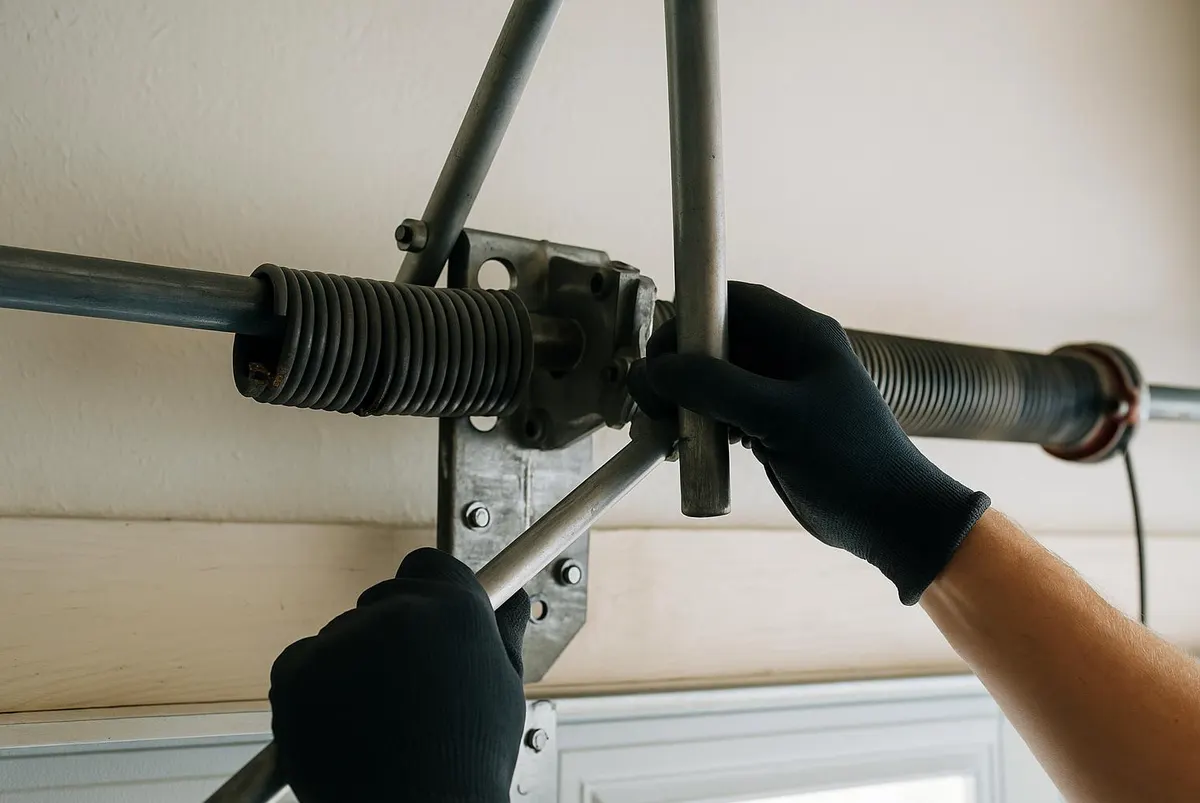
- Have spring tension checked before cold weather sets in. Steel springs behave differently as temperatures drop; a spring that's already near the end of its cycle life is more likely to fail during a cold snap, often right when a storm front is also moving through.
- Confirm the opener has battery backup or a manual release you actually know how to use. Power outages are common during fall and winter storm events, and a door stuck in whatever position it was in when the power cut out is a security and weather exposure problem until power returns.
- Clear and lubricate rollers and hinges. Debris from fall storms and the first rounds of road salt tracked in from driveways can accelerate rust on hardware that isn't maintained.
The Trade-Off Homeowners Actually Face
Full wind-rated door replacement is the most thorough fix, built to a higher wind-load rating from the factory, but it's also the most expensive option and not always necessary if the current door is structurally sound. Retrofit bracing and hardware upgrades are a middle path: lower cost, faster install, and a real improvement in resistance, but they don't change the door's fundamental rating. For most homes in this area, a combination of bracing, tightened hardware, fresh weatherstripping, and a properly tensioned spring system covers the realistic risk without the cost of full replacement—unless the door is already old, warped, or undersized for the opening.
When to Call Mishawaka Garage Door
If you're seeing panel flex, hearing new noises when wind hits the door, or you simply can't remember the last time the springs or hardware were inspected, that's the point to call rather than wait for a failure during a storm. Mishawaka Garage Door's maintenance service covers the full inspection—tracks, hardware, seals, and spring tension—and their spring replacement service handles springs that are worn or mismatched for the door's weight before they fail on their own schedule. Both are far cheaper and faster than an emergency repair call in the middle of a wind event.
Get your garage door storm-ready before the next front moves through. Call Mishawaka Garage Door today to schedule a pre-winter inspection in Mishawaka, IN.